

Hands measuring and preparing blue jeans for hemming on a wooden table with sewing tools nearby.Learning how to hem jeans might seem intimidating, but it’s one of the most common garment alterations you can do at home. Hemming divides denim wearers into four categories: those who pay to alter them, those who let them drag, those who cuff them, and those who hem them themselves. Becoming that fourth person saves money and makes sure your jeans fit right every time.
You might want to know how to shorten jeans using a sewing machine, how to hem jeans by hand, or even how to hem jeans without sewing machine. I’ve got you covered. We’ll also explore hemming jeans while keeping the original hem intact and alternative methods for different styles. This piece walks you through each technique and common mistakes, showing you how to achieve professional-looking results.
Understanding Different Jeans Hemming Methods
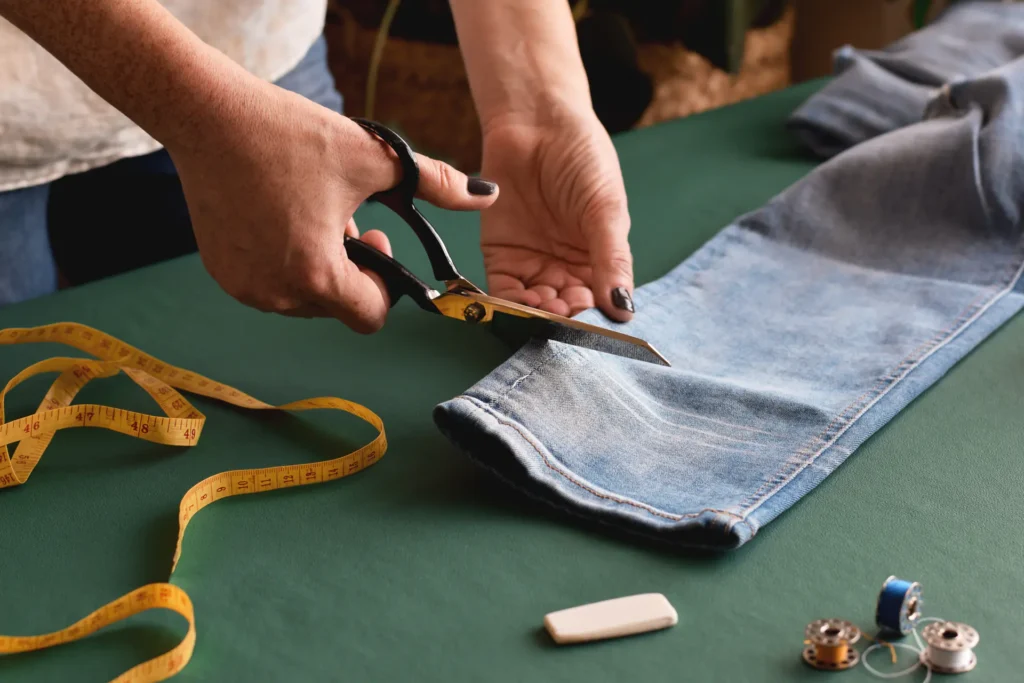
The hemming technique you choose affects both the appearance and functionality of your jeans. You need to decide between keeping or removing the factory-finished edge before you pick up scissors.
-
Keeping vs removing the original hem
Original hem preservation, also called the “Euro hem,” keeps your jeans’ factory edge intact while shortening the overall length. This technique involves sewing a new seam above the original hem and then folding the excess fabric inside the leg. The result maintains that distinctive fade pattern and precise stitching you see at the bottom of new jeans.
The standard method cuts away the original hem and creates a fresh edge. You’ll lose the factory stitching, but you get a cleaner interior without extra bulk. Professional tailors often resist keeping the original hem on stretch denim that contains spandex. The excess fabric creates a flared-out effect at the bottom, like the way hair flips outward. Preserving that worn pattern makes sense on vintage Levi’s and non-stretch denim, though.
-
Which method works for your jean type
Straight-leg jeans work well with original hem preservation since the leg width stays consistent from thigh to ankle. You can fold the fabric without bunching or puckering. Tapered jeans require an extra step: you’ll need to take in the inner leg seam at the new hem position before folding. The fabric bunches otherwise.
Flared or bootcut styles present a problem. The leg widens toward the hem, so you can’t fold the wider bottom up to meet a narrower point above it. Remove the original hem and create a new one for these styles.
Stretch denim needs careful handling. The spandex content can cause puckering if you pull the fabric while stitching. Skip the original hem method on these jeans unless you want that bulky, flared look.
-
Determining your ideal hem length
Wear the shoes you’ll pair with your jeans most often when measuring. Heel height changes everything. Fold the jean leg to your desired length and check it in a mirror before marking.
Wash your jeans before hemming. Denim shrinks in both length and width during the first wash, so working with pre-shrunk fabric prevents disappointment. Jeans should fall about an inch above the floor for a classic look.
Step-by-Step Guide to Hemming Jeans
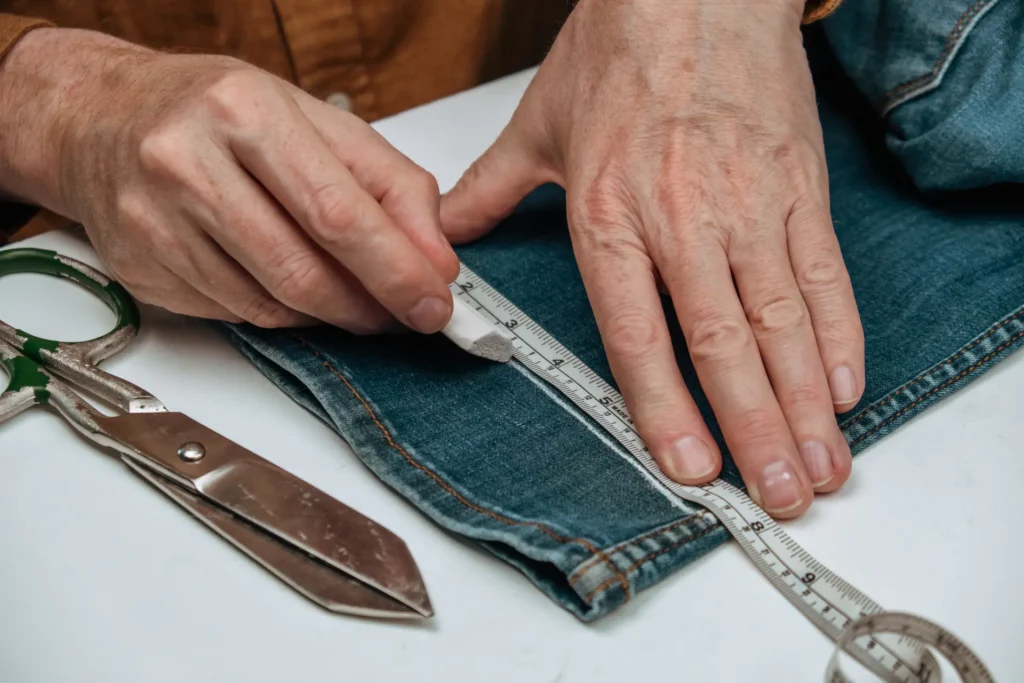
Gather your supplies before you begin: sharp fabric scissors, matching thread, measuring tape, pins, chalk or fabric marker, and an iron. A sewing machine gives you the best results, though hand-sewing works just as well.
-
Mark your desired length
Put on your jeans and fold the cuff up until you reach your desired length. Mark this spot with chalk while wearing them so you get it right. Take off the jeans and lay them flat on your work surface.
-
Calculate and cut
Draw two additional lines from your marked hemline. Add one line ½ inch below your marked hemline, which becomes your cut line. Add another line ½ inch above your hemline for your fold line. Cut the jeans along the lower line with sharp fabric scissors. Clean cuts prevent fraying and make sewing easier.
-
Fold and pin the new hem
Fold the fabric under along the fold line you marked earlier. This creates the new hem structure. Secure the folded fabric with pins around the leg opening. Check that the fold stays even as you pin.
-
Sew around the leg opening
Thread your machine with matching thread color for a natural look. Sew along the edge of the folded fabric to secure the new hem. A straight stitch works for most machines, but a backstitch provides extra durability on denim fabric.
-
Finish the raw edges
The raw edge inside needs finishing to prevent fraying. Use a zigzag stitch on your sewing machine or run it through a serger if you have one. This step keeps the fabric stable through multiple washes. Press the hem with an iron set to cotton for a polished finish afterward.
Alternative Ways to Shorten Jeans

Not everyone owns a sewing machine, and some hemming projects just need faster solutions. Hand sewing takes about 30 minutes per pair and gives you complete control over stitch placement.
-
Hand sewing method for beginners
Thread a heavy-duty needle with thread matching your jean color, a golden dark orange. Fold your hem twice, each fold measuring 1-1.5cm in thickness. The backstitch creates the most durable hand-sewn hem. Push your needle through the fabric layers and bring it back through just ahead of the previous stitch. Then push it back at the point between where it entered and exited. Space these stitches about 0.4cm from the folded edge. Catch more fabric to add strength at the time you reach thick seams, though this section won’t look as neat as the slip stitch areas.
-
No-sew options with fabric glue
Professional alterations cost upwards of GBP 27.80 to GBP 31.77 per pair. Call us for expert jeans hemming that saves both time and money if you need quality results without that expense.
Fabric glue provides a washable alternative for DIY no-sew solutions. Keep at least 1.5 inches of fabric inside your fold at the time you use Speed-Sew. Apply drops of glue every inch along the edge to prevent fraying. Hemming tape withstands 10-20 washes when applied the right way, whereas fabric glue lasts 5-10 washes before needing reapplication.
-
Creating a raw hem look
Raw hems work best on 99% cotton denim since stretch fabrics don’t fray well. Cut your jeans at the desired length and beat the edges against a hard surface to create natural fraying. You can also sew a stabilizing line 1/4 inch from the edge to control how far the fabric unravels.
-
Stepped hem without stitching
This trendy option creates different front and back lengths without any sewing. Cut and leave the edges unfinished to achieve an effortless look.
Common Mistakes and How to Fix Them
Mistakes happen, even after you follow every step carefully. You can fix some errors at home. Others need professional intervention.
-
Cutting too much fabric off
You create a frustrating situation when you trim past your marked line. You cannot simply sew the cut piece back on because the seam allowance reduces the usable length. Professional tailors sometimes face this issue too. Nordstrom altered jeans half an inch too short, and customers demanded full refunds or replacements since the mistake proved irreversible. One solution involves adding contrasting fabric strips to the sides and recruiting extra width to recreate the correct length.
-
Uneven hem lengths
You get uneven results when you measure jeans flat on a table. Your body’s unique proportions require you to measure while wearing them. Stand in front of a mirror and measure up from the floor to mark each leg separately. People often have slight differences between left and right sides. Fold the hemmed leg over the unhemmed one and mark to match both sides.
-
Dealing with puckered hems
Puckering comes from excessive thread tension, wrong needle type, or skipping the pressing step. Unstitch the hem, steam press it flat, then restitch. Run a gather line along the hem edge and pull lightly to adjust the fabric so it lies smooth.
-
Breaking needles on thick seams
Denim needles prevent breakage better than universal types. Hammer your thick seams before sewing to break down the fabric’s density. Place folded scrap fabric under your presser foot to keep it level when crossing bulky areas. Guide the fabric gently without pulling.
Call us for expert results if you want quality jeans hemming without these headaches.
Conclusion
Hemming your own jeans saves money and gives you control over the fit. You can choose machine sewing, hand stitching, or no-sew methods. The techniques I’ve shared here help you achieve professional results at home. Practice on an old pair first to build confidence. Most beginners become skilled at simple hemming within their first attempt. But if you prefer guaranteed quality, call us for expert jeans hemming that delivers perfect results every time.
Contact us
📞 Phone: 07944 601228, call to book or ask questions.
✉️ Email: info@goldentailoring.co.uk
📍 Address: Second Floor, 59 Brewer Street, London W1F 9UN (Get direction)
Shop Hours: Mon–Sat 10:00–6:30; (Closed Sun)
Fix the length properly, not temporarily.
Book a professional jeans hemming service and restore the correct fit with a clean, durable finish.
FAQs
Should I keep the original hem when shortening my jeans?
Keeping the original hem works best for straight-leg jeans made from non-stretch denim, as it preserves the factory fade and stitching. However, this method isn’t recommended for stretch denim containing spandex, as the excess fabric can create a flared-out effect at the bottom. For tapered, flared, or bootcut styles, it’s better to remove the original hem and create a new one.
What’s the most important step before hemming jeans?
Always wash your jeans before hemming them. Denim shrinks in both length and width during the first wash, so working with pre-shrunk fabric prevents the disappointment of jeans becoming too short after hemming. Additionally, wear the shoes you’ll pair with your jeans most often when measuring to ensure the correct length.
Can I hem jeans without using a sewing machine?
Yes, you can hem jeans by hand using a backstitch method, which takes about 30 minutes per pair. Alternatively, you can use no-sew options like fabric glue or hemming tape. Fabric glue typically lasts 5-10 washes, while hemming tape can withstand 10-20 washes when applied correctly.
How do I prevent my sewing machine needle from breaking on thick denim seams?
Use a denim needle instead of a universal needle, as it’s specifically designed for heavy fabrics. Before sewing, hammer the thick seams to break down the fabric density. You can also place folded scrap fabric under your presser foot to keep it level when crossing bulky areas, and guide the fabric gently without pulling.
What should I do if I accidentally cut my jeans too short?
Unfortunately, you cannot simply sew the cut piece back on because the seam allowance reduces the usable length. This mistake is generally irreversible. One creative solution involves adding contrasting fabric strips to the sides to recreate the correct length, though this significantly changes the appearance of the jeans.